Elderly Parent Not Answering the Phone? What to Do
 Sarah Mitchell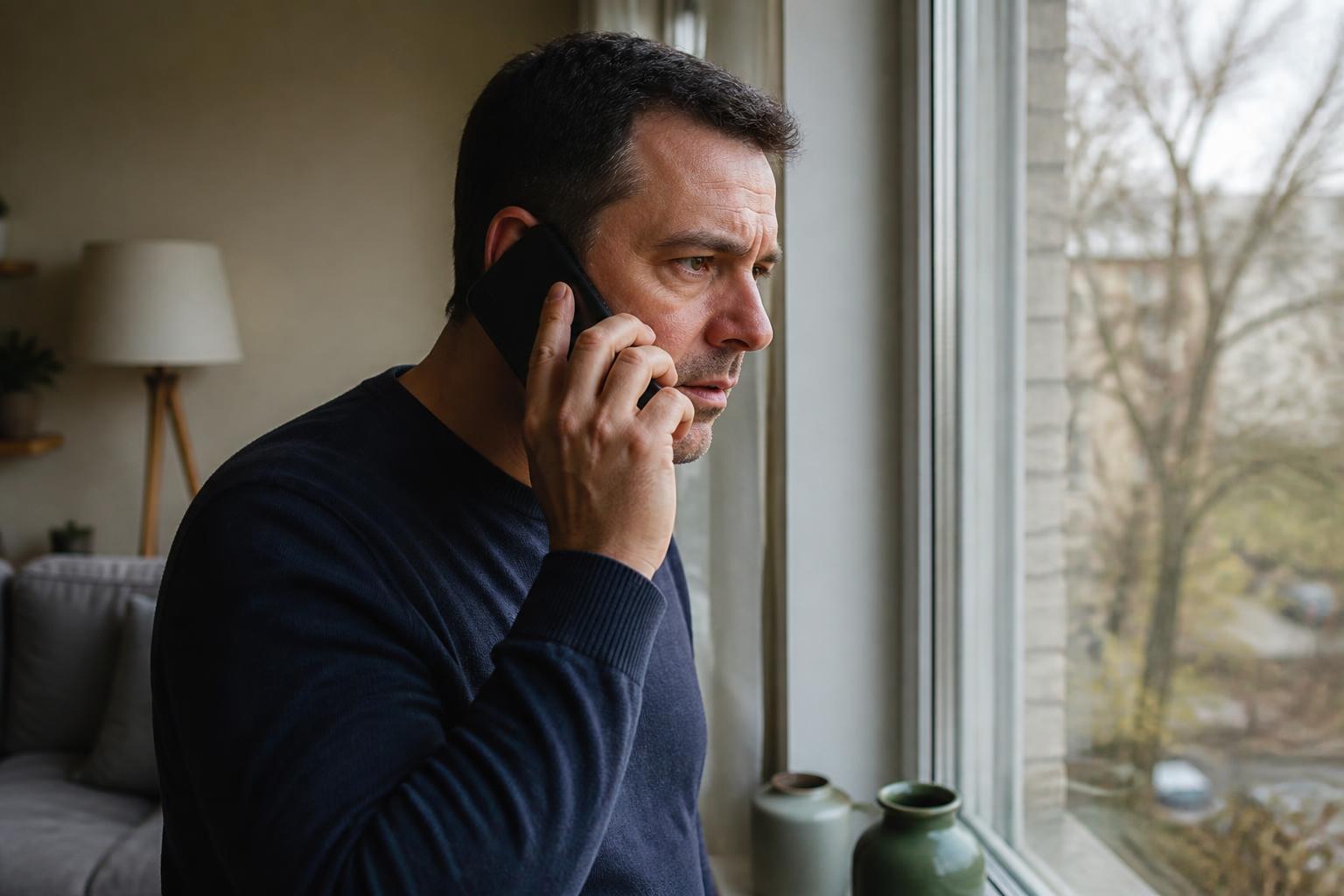
You called your mom like you do most days. It rang out. You called again. Still nothing. You texted, and the little “delivered” sat there with no reply. Now your stomach is tight and your mind is running through everything that could be wrong.
First, take a breath. Most of the time, a parent who does not answer the phone is fine. They left it in another room, the ringer is off, they are napping, or the battery died. But “most of the time” is not “always,” and the only way to settle the worry is to work through it calmly and quickly. Here is exactly what to do.
What to Do Right Now: A Step-by-Step Plan
Work through these steps in order. Do not skip ahead to the frightening option until you have ruled out the ordinary ones, but do not wait hours between steps either.
Call again, then try other numbers
Ring the main line once more, then try any other number they have, such as a landline or a second phone. Older phones sometimes drop the first call or take a moment to wake up.
Send a text and a voicemail
Leave a short, calm voicemail and send a text asking them to reply or call back. Say you just want to know they are okay. A reply, even a slow one, ends the emergency.
Contact someone who lives close by
Call a neighbor, a nearby relative, or a friend who can physically look in. A two-minute knock on the door answers the question faster than anything else.
Try their building or community, if they have one
If your parent lives in an apartment, assisted living, or a retirement community, call the front desk, manager, or on-site staff and ask them to check the unit.
Go over yourself if you can get there quickly
If you live close enough to arrive within a reasonable time and no one else can check, drive over. Bring a key if you have one.
Request a welfare check from the police
If no one can reach them and you have real reason to worry, call the police non-emergency line for the town where your parent lives and ask for a welfare check. Call 911 instead if you believe it is a life-threatening emergency right now.
The whole sequence can take fifteen minutes if you have a neighbor’s number ready, or longer if you are starting from scratch. That gap is exactly why having a plan in place before this happens matters so much, which we will get to below.
When to skip straight to a welfare check or 911
Move quickly to the last step if your parent has a serious medical condition, recently fell or was unwell, sounded confused the last time you spoke, or was expecting your call and would normally always answer. Trust your instinct. Emergency dispatchers would far rather do a welfare check that turns out fine than be called too late.
How to Request a Welfare Check
A welfare check, sometimes called a wellness check, is when police visit someone’s home to confirm they are safe. It is a routine part of what local police do, and you do not need to be certain something is wrong to ask for one.
To request it, call the non-emergency police number for the city or county where your parent lives, not your own town. Search “[their city] police non-emergency number” if you do not have it. If you believe there is an immediate, life-threatening emergency, call 911 instead.
Be ready to give the dispatcher:
- Your parent’s full name and exact address, including apartment or unit number
- Their age and any medical conditions
- Why you are worried and when you last had contact
- Whether anyone has a key or how to access the home
- A description of your parent if it helps
For a fuller explanation of how welfare checks work and the other types of wellness checks available, see our guide on what a wellness check for seniors actually involves.
Why Elderly Parents Often Don’t Answer
While you wait to reach them, it helps to remember how common and harmless most non-answers are. Knowing the usual reasons can keep the panic in proportion.
- The phone is in another room or buried in a bag, and they never heard it.
- The ringer is off or the volume is turned down, often by accident.
- They are asleep, in the shower, outside in the garden, or out at an appointment.
- The battery died or the phone was never charged.
- They struggle with the phone itself, especially a smartphone, and missed the call or could not figure out how to call back.
- They are screening calls they do not recognize, including their own family’s new numbers.
None of this means you were wrong to worry. It means the worry usually has an ordinary ending. The goal is a system that gives you that ordinary ending fast, instead of an afternoon of dread every time a call goes unanswered.
Every 11 seconds
an older adult is treated in an emergency room for a fall, which is why a missed call can carry such weight when a parent lives alone.
National Council on Aging
How to Stop the Panic From Happening Again
Here is the hard truth: chasing an unanswered phone is a stressful, unreliable way to keep someone safe. It depends on you noticing, on you being free to make calls, and on having a neighbor on standby. It also puts all the weight on you, every single day.
A daily check-in service flips the arrangement. Instead of you calling to confirm your parent is okay, the service does it automatically and only contacts you if something seems wrong. No answer triggers a defined response on its own, so a missed check-in never just sits there unnoticed.
This is the problem we built CheckRise to solve. Each day, your parent gets a simple text asking if they are okay, and they reply to confirm. If they do not respond, CheckRise sends a reminder, then places an automated voice call to them, and then alerts you and the rest of the care circle by text and phone call until someone acknowledges. It works on any phone, including a basic flip phone, and nobody needs to install an app.
The point is to be missed quickly
The danger of living alone is not only that something goes wrong. It is that it goes unnoticed. A daily check-in shrinks the window between “something happened” and “someone knows” from possibly days down to a single missed check-in. That is the difference a system makes over a phone call you have to remember.
Setting it up takes a couple of minutes, and you can have your parent and your siblings all on the same care circle so the responsibility is shared rather than resting on one person.
Never wonder 'are they okay?' again
CheckRise checks in on your parent every day and alerts your whole family if they don't respond. Works on any phone, no app needed. Set up in 2 minutes.
Start Your $1 TrialNo commitment. Cancel anytime.
A Few More Things That Help
Beyond a check-in service, a few small habits make the unanswered-phone scare far less likely and far less frightening:
- Keep a current list of contacts near your parent: neighbors, their building’s front desk, a local friend, their doctor. Having these numbers ready turns a panicked search into two quick calls.
- Agree on a routine. If you and your parent settle on a regular time to talk, a missed call at that time is a clearer signal than a random one.
- Ask a neighbor to be a backup. Most people are glad to help, and a friendly neighbor who can knock on a door is one of the most valuable safety tools there is.
- Make sure their phone is easy to use and charged. A simple phone, kept on a charger in a consistent spot, removes one of the most common reasons calls go unanswered.
If you are managing all of this from another city or state, our long-distance caregiving guide covers the tools and systems that make it work. And if the constant low-level worry has started to wear you down, you are not imagining it. Read about feeling trapped caring for an elderly parent for practical ways to carry it more lightly.
Frequently Asked Questions
My elderly parent isn't answering the phone. Should I call the police?
How do I request a welfare check on my parent?
What are the most common reasons an elderly parent doesn't answer?
How can I avoid panicking every time my parent doesn't pick up?
What is a daily check-in service and how does it help?
Try CheckRise free for 7 days
Daily SMS check-ins with automatic escalation to your care circle. Set up in 2 minutes.
Start Your $1 TrialNo commitment. Cancel anytime.
Sarah Mitchell
Senior Care Specialist
Sarah Mitchell is a senior care specialist with over a decade of experience helping families navigate aging, independence, and caregiving. She writes about practical tools and strategies that make daily life safer for older adults and less stressful for the people who love them.
Related Articles
When Should an Elderly Person Not Live Alone?
How do you know when it's no longer safe for an aging parent to live alone? Here are the warning signs to watch for, what they mean, and what to do next.

What Is a Wellness Check for Seniors? (2026)
Learn about the 4 types of wellness checks for elderly people: police welfare checks, professional home visits, daily check-in services, and community programs.

AssureOkay Review (2026): Cheapest Check-In App?
An honest AssureOkay review: how the app works, what the $4.99 plan really includes, the trade-offs of a newer service, and whether it is worth it in 2026.