Long-Distance Caregiving: A Practical Guide for 2026
 Sarah Mitchell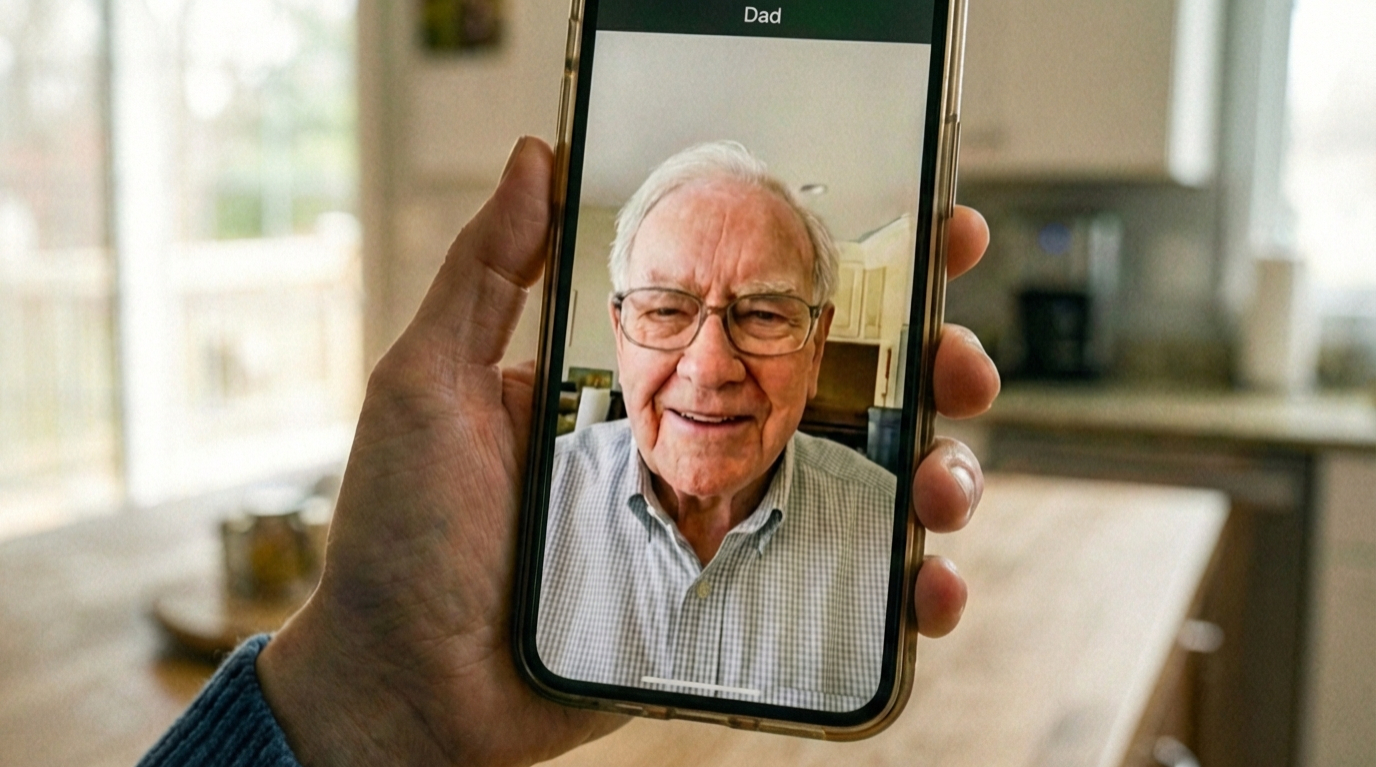
There is a specific kind of worry that belongs to people caring for an aging parent from a distance. It is not the exhaustion of daily, hands-on caregiving. It is something quieter and in some ways harder to manage: the constant low-level dread of not knowing.
You are at work and your phone buzzes. Your heart rate spikes before you even look at the screen. You call your mother at the usual time and she does not pick up. Fifteen minutes pass. You call again. Nothing. Now you are running scenarios in your head while pretending to focus on a spreadsheet.
If you live more than an hour from your aging parent, you are a long-distance caregiver. And you are far from alone.
11 million+
Americans provide care for an aging relative from a distance of at least one hour away
National Alliance for Caregiving & AARP
Long-distance caregiving brings its own set of challenges that are different from what local caregivers face. You cannot just stop by. You cannot quickly check whether the fridge has food in it or whether the house smells right. You depend on secondhand information, scheduled phone calls, and the hope that no news is good news.
This guide is about replacing hope with systems. Practical, concrete strategies that give you real information about your parent’s well-being every day, whether you live two hours away or across the country.
Why Long-Distance Caregiving Is So Hard
Local caregivers are often physically exhausted. Long-distance caregivers are mentally exhausted. Both are valid. Both take a toll. But the specific stresses of caring from afar deserve attention because they are so often dismissed.
The uncertainty is relentless. When you live nearby, you see your parent regularly. You notice small changes: weight loss, a limp, confusion about what day it is. From a distance, you are working with fragments. A phone call that sounded “a little off.” A neighbor who mentions your dad seemed confused at the mailbox last Tuesday. You are constantly trying to assemble a picture of your parent’s well-being from incomplete pieces.
The guilt is amplified. Every long-distance caregiver carries a version of the same thought: I should be there. It surfaces when your parent mentions being lonely, when a sibling who lives closer makes a comment about “doing everything,” or when you hear about a fall three days after it happened. The guilt is often worse than the actual logistics, because it is always running in the background.
The logistics are expensive and disruptive. When something does go wrong, responding means last-minute flights, emergency time off work, and days of scrambling to coordinate care from a hotel room near your parent’s house. The average long-distance caregiver spends nearly $12,000 per year on travel and care-related expenses, according to the National Alliance for Caregiving.
You are always the last to know. This is perhaps the hardest part. Your parent minimizes problems because they do not want you to worry. Their doctor cannot share information without consent. The neighbor who used to keep an eye out has moved. By the time something reaches you, it has often been building for weeks.
“The worst part of long-distance caregiving isn't the distance. It's the gap between what you know and what you're afraid you don't know.”
If the emotional weight of managing a parent’s safety from far away has started to take a serious toll, know that feeling trapped caring for an elderly parent is one of the most common experiences in adult life, and there are real strategies to lighten the load.
Building Your Long-Distance Care System
The difference between long-distance caregiving that works and long-distance caregiving that slowly destroys you is structure. Not more love, not more phone calls, not more guilt-driven weekend visits. Structure.
A reliable long-distance care system has four layers. You do not need to build all four at once, but each one closes a gap that the others cannot.
Layer 1: Daily Confirmation
The most important question in long-distance caregiving is the simplest: Is my parent okay today?
Without a system to answer that question every single day, you are left guessing. And guessing is what creates the anxiety that follows you into every meeting, every dinner, every quiet moment.
A daily check-in service for seniors solves this by making contact with your parent every morning at a set time. They confirm they are okay with a simple reply. If they do not respond, you find out within hours, not days. This single change can dramatically reduce the ambient worry that defines long-distance caregiving.
CheckRise works this way: a text message goes out at the scheduled time, your parent replies, and you have confirmation. If they miss the check-in, the system sends a reminder, then calls them, then alerts your care circle contacts one by one until someone acknowledges. The entire escalation runs automatically. No one needs to remember to call.
Other options in this space include phone-call-based services like IAmFine and FallerSafe, which work better for parents who prefer voice over text. For a full comparison, see our guide to the best Snug Safety alternatives or the CheckRise vs. Snug Safety breakdown.
The key is finding something your parent will actually use. The simpler the better. If they can reply to a text message or answer a phone call, that is enough.
Layer 2: Local Support Network
Technology handles daily confirmation. But when something goes wrong, you need people on the ground. Building a local support network is the single most important logistical step a long-distance caregiver can take.
Identify 2-3 nearby contacts
These are the people who can physically get to your parent within 30 minutes: neighbors, friends from church, a nearby cousin, a trusted former coworker. Exchange phone numbers, give them a key to your parent's home if appropriate, and establish clear expectations about when you might call on them.
Build a professional care team
Your parent's primary care physician, pharmacist, home health aide (if applicable), and any specialists they see regularly should all know that you are the long-distance family contact. Ask your parent to sign HIPAA authorization forms so their medical providers can share information with you directly. Without this, you are legally shut out of critical conversations.
Connect with local aging services
Every region has an Area Agency on Aging that coordinates services for older adults. Contact yours through the Eldercare Locator at eldercare.acl.gov or by calling 1-800-677-1116. Ask about Meals on Wheels, transportation programs, home repair assistance, and telephone reassurance programs. These services exist specifically for situations like yours.
Hire a geriatric care manager
If your budget allows, a geriatric care manager (also called an aging life care professional) is the most powerful tool in the long-distance caregiver's toolkit. They are licensed professionals who live in your parent's area, conduct regular home assessments, coordinate medical care, and serve as your eyes and ears on the ground. The Aging Life Care Association directory at aginglifecare.org can help you find one. Typical costs range from $100 to $250 per hour for assessments, with ongoing management plans varying by need.
Create a care coordination document
Put everything in one shared document: your parent's medications, doctors, insurance information, daily routine, emergency contacts, and the contact information for every person in their support network. Share it with siblings, care circle members, and any professional caregivers. When a crisis happens at 2 AM, you do not want to be searching through text messages for a phone number.
Layer 3: Technology and Monitoring
Beyond daily check-ins, technology can passively monitor patterns and flag changes before they become emergencies. The right tools depend on your parent’s comfort level and living situation.
Smart home sensors (motion detectors, door sensors, smart plugs) can track daily routines without requiring your parent to do anything. If the bathroom motion sensor does not trigger by 10 AM, or the refrigerator has not been opened all day, you get an alert. Options like SimpliSafe and Samsung SmartThings are popular starting points.
Video calling on a simple device like an Amazon Echo Show or a GrandPad tablet lets you see your parent, not just hear them. Visual check-ins reveal things a phone call cannot: a messy house, visible bruises, weight changes, or confusion that is not apparent by voice alone.
Medical alert systems with fall detection and GPS provide emergency response when you cannot be there. If your parent falls and presses a button (or the device detects the fall automatically), a trained operator dispatches help immediately. Medical Guardian and Bay Alarm Medical are among the most reliable options.
Medication management tools like automatic pill dispensers (Hero, MedMinder) and pharmacy sync programs ensure prescriptions are taken on schedule. Missed medications are one of the most common and most preventable risks for seniors living alone.
For a complete breakdown of all 12 monitoring methods, including costs, tech requirements, and how to combine them, see our guide on how to check on elderly parents living alone.
Layer 4: Emergency Preparedness
When something goes wrong with a parent who lives far away, the first few hours are chaotic. Having a plan ready before you need it saves time and reduces panic.
Keep a go bag ready. If you need to travel on short notice, have a bag with essentials already packed. Include chargers, a notebook with your care coordination document printed out, and any legal documents you might need (power of attorney, health care proxy, insurance cards).
Know the local emergency resources. Save the non-emergency police number for your parent’s city (here’s how to request a welfare check from another state), the nearest hospital’s direct line, and the phone number for their local Area Agency on Aging. Knowing where to call saves critical minutes. For a detailed guide on requesting a wellness check for seniors through police and other channels, see our dedicated guide.
Establish financial access. If your parent becomes incapacitated, you may need to pay bills, manage insurance, or make financial decisions on their behalf. A financial power of attorney, a joint bank account, or authorized user status on key accounts should be arranged well before they are needed.
Discuss wishes in advance. Have the difficult conversations about end-of-life preferences, living arrangements if independence is no longer safe, and what “too much” looks like to your parent. These conversations are easier to have when they are hypothetical than when you are making decisions in a hospital hallway.
The HIPAA Form Is Non-Negotiable
Without a signed HIPAA authorization, your parent’s doctors cannot legally tell you anything. Not what medication they are on, not what happened at their last appointment, not whether they showed up at all. If you do nothing else from this guide, get the HIPAA form signed. Your parent’s primary care physician can provide the form, or you can download a template from the HHS website. It takes five minutes and can save you days of frustration during a medical crisis.
Managing the Emotional Toll
Long-distance caregiving is not just a logistics problem. It is an emotional one. And the emotions are complicated because they do not follow a clean narrative.
You feel guilty for not being there. You feel resentful when siblings who live closer do not do enough. You feel anxious every time the phone rings. You feel helpless when you hear about a problem you cannot physically solve. And sometimes you feel relief that you do not have to deal with it in person, followed immediately by guilt about the relief.
All of this is normal. None of it makes you a bad person.
What Actually Helps
Stop trying to replicate local caregiving from afar. You cannot be a hands-on caregiver from 500 miles away. Trying to be one will exhaust you and frustrate your parent. Your role as a long-distance caregiver is different: you are the coordinator, the researcher, the person who builds the system. Own that role instead of apologizing for not filling a role you physically cannot.
Replace worry with information. Most of the anxiety in long-distance caregiving comes from not knowing. Every system you put in place — a daily check-in, a local contact who checks in weekly, a smart sensor that flags unusual patterns — replaces a worry with a data point. You will never eliminate all uncertainty, but you can reduce it from a flood to a trickle.
Set communication boundaries. Decide on a regular check-in schedule and hold to it. Calling your parent three times a day out of anxiety is not caregiving. It is your anxiety looking for relief. One daily check-in (automated or personal) plus a longer weekly call is enough for most situations.
Talk to someone who understands. The AARP Community Caregiving forum, the Family Caregiver Alliance support groups, and local hospital caregiver programs all offer peer support specifically for long-distance caregivers. There is something profoundly relieving about talking to people who understand exactly what you are going through without needing an explanation.
Protect your own health. Caregiver burnout does not require physical proximity. The mental load of long-distance caregiving — the constant planning, the background anxiety, the interrupted sleep — takes a measurable toll on your health. If you notice the signs of burnout (exhaustion that sleep does not fix, emotional numbness, withdrawal from your own life), take action before it deepens.
“You don't have to be in the same city to burn out. The worry travels with you.”
Making the Most of Visits
When you do visit your parent in person, make those visits count beyond just spending time together. Here is a practical checklist for each visit.
Home safety check:
- Walk through every room and look for hazards: loose rugs, burned-out lightbulbs, cluttered pathways, expired food
- Test smoke detectors and carbon monoxide alarms
- Check that the hot water heater is set below 120°F to prevent scalding
- Look at the bathroom: are grab bars needed? Is the tub slippery?
Health assessment:
- Notice weight changes, mobility changes, bruising, or signs of confusion
- Check the medicine cabinet: are medications current? Are there expired bottles? Are doses being taken on schedule?
- Accompany your parent to a doctor’s appointment if possible (schedule one during your visit)
System maintenance:
- Update the care coordination document
- Meet or check in with local contacts: neighbors, the home health aide, the geriatric care manager
- Test any technology: make sure the daily check-in service is working, sensors have batteries, the medical alert pendant charges properly
- Restock supplies and address any home maintenance issues
Financial review:
- Look at mail for unpaid bills, unfamiliar charges, or potential scam correspondence
- Check that automatic payments are running correctly
- Watch for signs of financial exploitation, which affects an estimated 1 in 10 older adults
Schedule the Hard Conversations
In-person visits are the best time to discuss topics that are difficult to address by phone: changes in living arrangements, driving safety, legal documents, and end-of-life preferences. These conversations go better face-to-face, where tone and body language reduce misunderstanding. Bring them up early in the visit, not on the last day when emotions are already high about leaving.
When You Cannot Be There: A Quick Reference
| Situation | What to Do | Who to Call |
|---|---|---|
| Parent doesn't answer phone for 24+ hours | Request a wellness check | Non-emergency police line in parent's city |
| Parent reports a fall but says they're fine | Have a local contact check in person within hours | Nearby contact from your care network |
| Parent seems confused or disoriented on a call | Schedule a doctor's appointment within the week | Primary care physician's office |
| Parent mentions not eating or skipping meals | Enroll in Meals on Wheels immediately | mealsonwheelsamerica.org or 211 |
| Neighbor reports something concerning | Verify independently, then assess next steps | Your parent first, then local contacts |
| Parent has a medical emergency | Call 911 from wherever you are (give parent's address) | 911, then your local care contacts |
The Long-Distance Caregiver’s Monthly Checklist
Use this checklist to stay on top of ongoing responsibilities without letting anything slip through the cracks.
Weekly:
- One longer phone or video call with your parent (beyond the daily check-in)
- Brief check-in with at least one local contact
Monthly:
- Review medication list for changes
- Check in with any professional caregivers (home health aide, geriatric care manager)
- Review finances and mail (remotely if you have online access, or ask a local contact to check mail)
- Update care coordination document if anything has changed
Quarterly:
- Contact your parent’s primary care physician for an update (with HIPAA authorization)
- Reassess the care plan: is the current setup still working? Have needs changed?
- Check technology: are sensors working? Is the daily check-in service still appropriate?
- Evaluate whether an in-person visit is due
Annually:
- Review and update legal documents (power of attorney, health care proxy, will)
- Reassess whether living alone is still safe and sustainable
- Have the “what if” conversation about next steps if independence becomes unsafe
- Review insurance coverage and benefits eligibility
You Do Not Have to Do This Alone
Long-distance caregiving can feel isolating. You are carrying a weight that most of your coworkers, friends, and even your partner may not fully understand. But you are not the first person to walk this road, and you do not have to figure it all out by yourself.
Start with one thing. Sign up for a daily check-in service so you know your parent is okay every morning. Or call the Eldercare Locator and find out what services are available in your parent’s area. Or have the HIPAA conversation this weekend. Just one step.
The goal is not to build a perfect system overnight. It is to replace anxiety with information, one piece at a time, until you have a structure that lets you be a loving child from a distance without losing yourself in the process.
Key Resources for Long-Distance Caregivers
- Eldercare Locator — Call 1-800-677-1116 or visit eldercare.acl.gov to find services near your parent
- Aging Life Care Association — aginglifecare.org — find a geriatric care manager in your parent’s area
- Family Caregiver Alliance — caregiver.org — support groups and state-by-state resources
- AARP Caregiving Resource Center — aarp.org/caregiving — free guides and a caregiving helpline
- National Alliance for Caregiving — caregiving.org — research and programs for family caregivers
Know your parent is okay -- every single day
CheckRise sends a daily text and alerts your care circle automatically if something seems wrong. Set up in 2 minutes from anywhere.
Start Your $1 TrialNo commitment. Cancel anytime.
Frequently Asked Questions
How do I check on my elderly parent who lives far away?
What is a geriatric care manager and do I need one?
How often should I visit my elderly parent who lives far away?
How do I manage caregiver guilt when I live far away?
What legal documents do I need for long-distance caregiving?
How much does long-distance caregiving cost?
Try CheckRise free for 7 days
Daily SMS check-ins with automatic escalation to your care circle. Set up in 2 minutes.
Start Your $1 TrialNo commitment. Cancel anytime.
Sarah Mitchell
Senior Care Specialist
Sarah Mitchell is a senior care specialist with over a decade of experience helping families navigate aging, independence, and caregiving. She writes about practical tools and strategies that make daily life safer for older adults and less stressful for the people who love them.
Related Articles
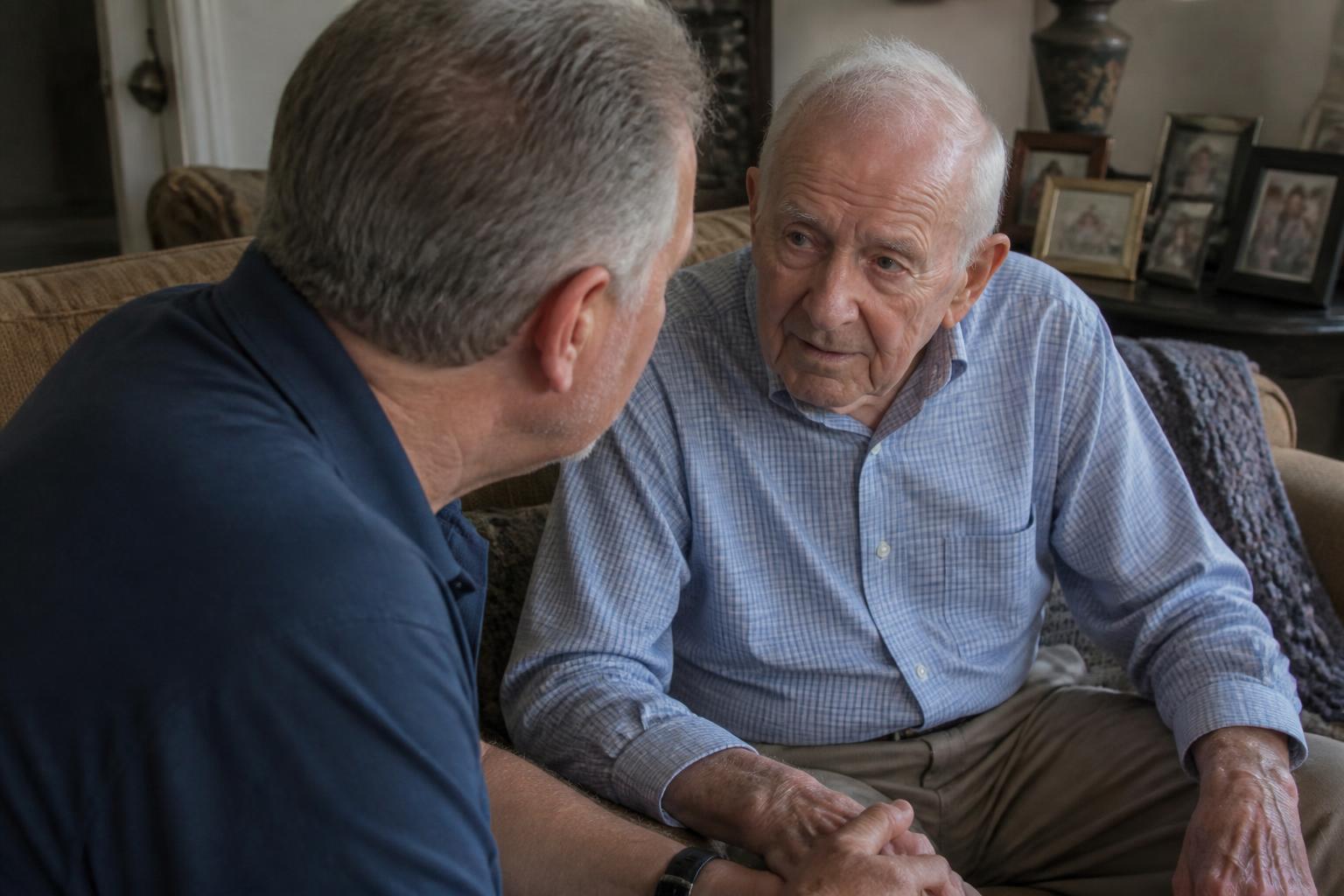
How to Talk to Parents About Assisted Living
A calm, practical guide to talking to elderly parents about assisted living: why it is hard, how to start, what to do if they refuse, and the middle-ground options.
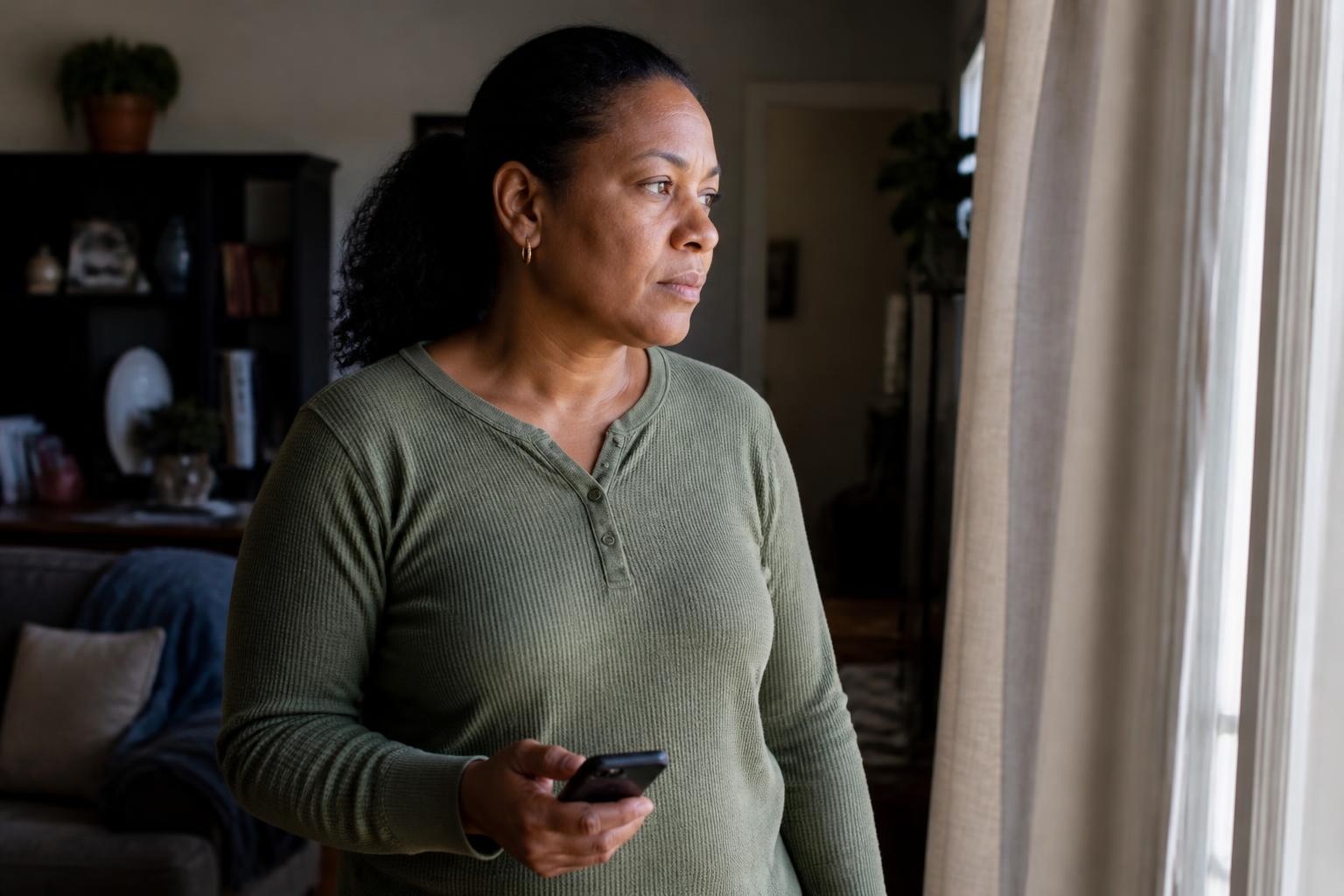
Worried About an Elderly Parent Living Alone?
If you are constantly worried about an elderly parent living alone, here is how to name the fear, reduce the real risks, and worry less without forcing a move.

Caregiver Guilt: How to Cope When You Can't Do It All
Caregiver guilt is one of the heaviest parts of caring for an aging parent. Here's why you feel it, why it doesn't mean you're failing, and how to ease it.