Worried About an Elderly Parent Living Alone?
 Sarah Mitchell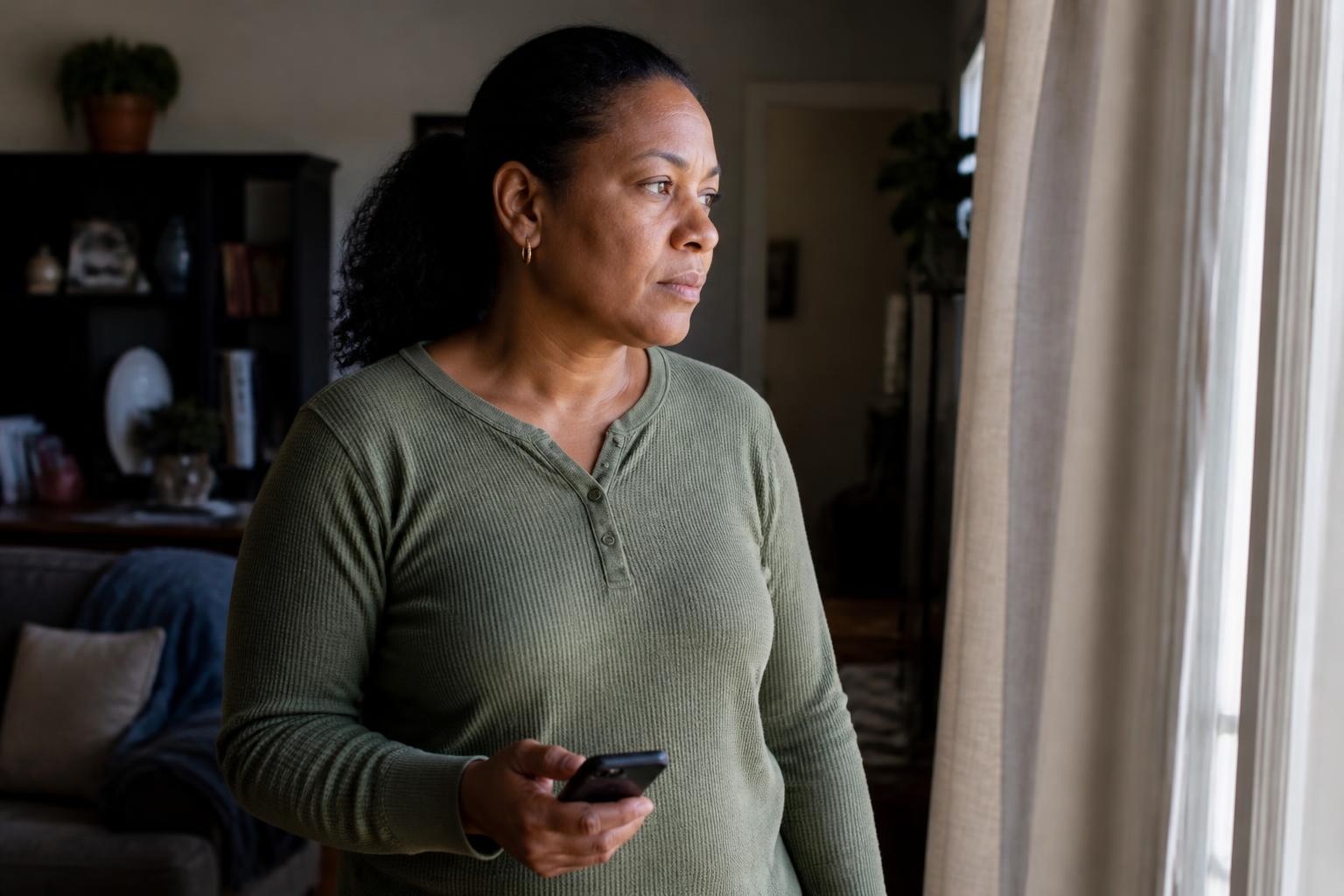
It usually hits at a quiet moment. You are at work, or lying in bed, and the thought arrives on its own: is Mom okay right now? You have no reason to think anything is wrong. You just cannot be sure, and the not-knowing sits in your chest all day.
If you are constantly worried about an elderly parent living alone, you are not being dramatic and you are not alone. It is one of the most common experiences of having an aging parent, and the worry is not irrational. It is a signal that something real is unaddressed. The good news is that most of what fuels it can be reduced with a few practical steps, and usually without forcing anyone to give up their home.
Every 11 seconds
an older adult is treated in an emergency room for a fall. The fear of a fall or a medical event going unnoticed is the worry that keeps most families up at night.
National Council on Aging
You Are Not Overreacting
It helps to say this plainly: worrying about a parent who lives alone is a normal, healthy response, not a character flaw or a sign you are being controlling. Your parent has spent decades independent, and you love them, and you know that age brings risks that were not there before. Holding both of those truths at once is uncomfortable by design.
The problem is not the worry itself. The problem is worry with nowhere to go. When there is no system, no plan, and no way to know your parent is okay on any given day, your mind fills that gap with worst-case scenarios. Give the worry something concrete to hold onto and it usually quiets down.
Name What You Are Actually Afraid Of
Vague dread is hard to act on. Specific fears are solvable. When families describe what actually keeps them up, it almost always comes down to a short list:
- A fall with no one there. They go down, cannot get up, and lie on the floor for hours because no one knows.
- A sudden medical event. A stroke, a cardiac event, a bad reaction, where minutes matter and no one is aware.
- A slow decline you cannot see. Missed meals, skipped medication, or confusion that builds quietly between your visits.
- Simply not knowing. The day-to-day uncertainty of not being sure they are okay right now.
Notice that most of these are not really about whether your parent should live alone. They are about detection: the fear that something will happen and no one will know in time. That is important, because detection is something you can actually fix.
Practical Steps to Worry Less
You do not need to solve everything at once. Layering a few of these dramatically shrinks the gap that worry lives in.
Set a predictable contact rhythm
A standing daily or every-other-day call or text turns 'I hope they're okay' into 'I'll know by 10am.' Predictability is what calms the mind, not frequency.
Reduce the home hazards you can
Most falls are preventable. Remove loose rugs, add grab bars in the bathroom, improve lighting on stairs, and clear cluttered walkways. A safer home is a smaller worry.
Add a daily check-in system
A service that confirms your parent is okay every day, and alerts you if they do not respond, closes the 'not knowing' gap without you having to call at the same time every morning.
Cover the acute emergencies
If your parent has fall risk or a health condition, a medical alert with fall detection handles the sudden events a daily check-in is not designed for.
Build a small care circle
You should not be the only person who would notice. A neighbor, a sibling, or a friend nearby means help can arrive faster and the load is not all on you.
Predictability beats frequency
You do not need to call ten times a day. What quiets worry is knowing, reliably, that you will hear if something is wrong. One dependable system beats a dozen anxious check-ins that still leave the overnight hours uncovered.
The Gap Most Families Miss: Daily Confirmation
Look back at that list of fears and you will notice the common thread is time. The danger of a fall or a medical event is not only the event itself, it is how long it goes unnoticed. A parent who gets help in twenty minutes has a very different outcome than one who waits until the next visit.
This is the gap a daily check-in service for seniors is built to close, and it is the piece most families overlook. We build one called CheckRise, so treat this as informed rather than neutral. The idea is simple: every day at a set time, your parent gets a text asking if they are okay. If they reply, you both move on with your day. If they do not, the service sends a reminder, then places an automated voice call to your parent, then calls and texts your care circle until a real person confirms they are alright. It works on any phone, including a basic flip phone, so there is nothing for your parent to learn.
It will not stop a fall from happening. What it does is make sure a bad morning does not become a lost day, and it gives your worry a reliable answer instead of an open question. For a fuller look at how these tools work, see our guide to daily check-in apps for seniors, and for other ways to stay connected, our guide on how to check on elderly parents living alone.
When the Worry Is a Signal to Reassess
Sometimes the worry is not just about detection. Sometimes it is your instinct telling you that living alone may genuinely no longer be safe. There is a real difference between “I want to know they are okay each day” and “I am seeing signs they cannot manage anymore.”
If you are noticing frequent falls, missed medication, weight loss, confusion, or a home that is no longer being kept up, that is worth taking seriously rather than only managing from a distance. Our guide on when an elderly person should not live alone walks through the specific warning signs, and what to do when an elderly parent is not answering the phone covers the moments that feel like an emergency in real time.
Be Kind to Yourself, Too
The worry has a cost, and it lands on you. Caring about a parent who lives alone can quietly become a second job that runs in the background of your mind all day. That is worth acknowledging, not pushing through. If the weight has started to affect your own life, you are not failing, and you are certainly not alone in feeling it. Our piece on caregiver guilt speaks to the emotional side of all this, because taking care of yourself is part of taking care of them.
Frequently Asked Questions
How do I stop worrying about my elderly parent living alone?
Is it normal to be constantly worried about an aging parent?
What can I do if I live far away from my elderly parent?
When should an elderly parent not live alone?
Turn 'I hope they're okay' into 'I'll know'
CheckRise texts your parent every day and, if they miss it, calls them and your care circle until someone confirms they're alright. Works on any phone, no app needed.
Start Your $1 TrialNo commitment. Cancel anytime.
Try CheckRise free for 7 days
Daily SMS check-ins with automatic escalation to your care circle. Set up in 2 minutes.
Start Your $1 TrialNo commitment. Cancel anytime.
Sarah Mitchell
Senior Care Specialist
Sarah Mitchell is a senior care specialist with over a decade of experience helping families navigate aging, independence, and caregiving. She writes about practical tools and strategies that make daily life safer for older adults and less stressful for the people who love them.
Related Articles
How to Talk to Parents About Assisted Living
A calm, practical guide to talking to elderly parents about assisted living: why it is hard, how to start, what to do if they refuse, and the middle-ground options.

Caregiver Guilt: How to Cope When You Can't Do It All
Caregiver guilt is one of the heaviest parts of caring for an aging parent. Here's why you feel it, why it doesn't mean you're failing, and how to ease it.

What to Do When an Elderly Parent Refuses Help
Your aging parent refuses help and you're scared something will happen. Here's why they resist, what actually works, and how to keep them safe without a fight.